
Short answer
Floor removal has four parts: clearing and protecting the space, taking up the old floor (by machine where possible, by hand at the edges), hauling the debris away, and preparing the slab for the new floor. Clear the rooms, plan for some dust and noise, and if your home has vinyl flooring or black adhesive from before the 1980s, have it tested for asbestos first.
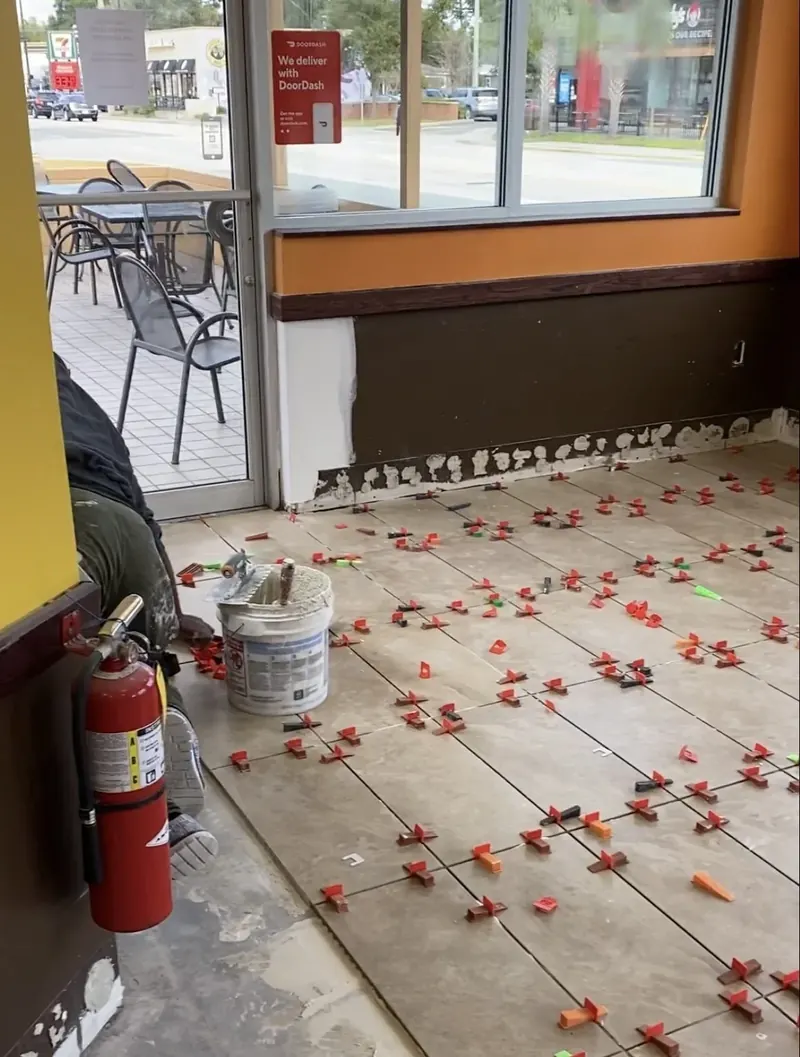
Before the crew arrives
- Move furniture, rugs and anything breakable out of the rooms, or ask what we can move for you.
- Take pictures and art off nearby walls; scraping tile can shake things loose.
- Plan where pets and kids will be. Tear-out days are loud.
- Clear a path to the door and a spot for the dumpster or trailer.
- Toilets come out for bathroom floors. Our licensed plumbers pull and reset them.
How the old floor comes up
Hand scraping a whole house of tile is slow, punishing work. FWC uses a National 5700 Renegade ride-on scraper: a battery-powered machine with a heavy blade that drives under the tile, vinyl or glued-down plank and lifts it off the slab. It steers hydraulically, turns in its own footprint, has non-marking tires and fits through standard doors and elevators. Edges, closets and tight corners are finished by hand.
Dust and noise
Any tile removal makes some dust and a lot of noise. Scraping tile off creates less airborne dust than breaking it out with hammers, but plan to keep doors closed, run the HVAC as little as possible during tear-out, and change the air filter afterwards. Ask how the crew will contain the work area in your home.
Debris and haul-off
Old tile and mortar are heavy. A whole-house tile tear-out can fill a dumpster's weight limit long before it looks full. FWC hauls debris away or sets one of our own dumpsters on site, so you don't have to arrange a separate container.
Getting the slab ready
Once the floor is up, leftover mortar and adhesive are scraped or ground down, cracks and low spots are patched, and the slab is checked for flatness. Prep is what decides whether a new floor stays flat, quiet and crack-free, so it's worth doing right.
Older floors: test before you tear out
Some vinyl floor tiles, sheet vinyl and black "cutback" adhesive installed before the 1980s contain asbestos. Intact, it's not a hazard. Scraping or grinding it is. If your home or building is that age and has old vinyl or black adhesive, have a sample tested by a lab before removal.