Short answer
Once tile is on the wall, everything behind it is locked in. Before tile, replace an old shower valve with a pressure-balancing or thermostatic valve, decide where every shower head, handheld and body spray goes, move or replace the drain for the new layout, replace old supply lines while the wall is open, and waterproof and test the shower floor.
Replace the valve
The valve is the brass body inside the wall that the handle and trim attach to. Shower valves are required to be pressure-balancing, thermostatic or a combination, which protects against sudden scalding when someone flushes a toilet. If your valve is old, or you're changing brands or adding functions, replace it now. Valves and trim usually have to come from the same manufacturer, so pick your fixtures before rough-in.
Decide every fixture location
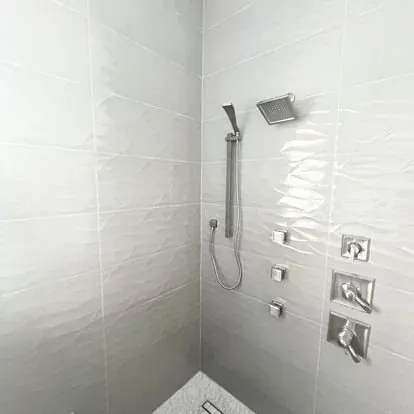
Rain heads, slide bars, handhelds, body sprays, niches, benches and grab bars all need to be planned before the walls close. Rain heads need a supply in the ceiling or a long arm. Body sprays need enough water flow to work well. Grab bars need solid blocking behind the tile, even if you add the bars later.
Move or replace the drain
A curbless shower or linear drain changes how the floor slopes, and on a concrete slab that can mean cutting and recessing the concrete. Moving a drain to a new location also means trenching the slab. These are plumbing changes that typically need a permit, pulled by a licensed plumbing contractor.
Update the pipes while the wall is open
If the house still has galvanized steel or polybutylene supply lines, or old cast iron drains, the shower remodel is the cheapest moment to replace the sections you can reach. Doing it after the new tile is in means tearing some of it back out.
Waterproof and test
Tile and grout aren't waterproof by themselves. The shower floor needs a pan liner or a waterproofing membrane sloped to the drain, and the walls need a waterproof backer or membrane. A flood test, plugging the drain and filling the pan with water to check for leaks before tile, is cheap insurance.
Why one company helps
On most shower remodels the plumber and the tile setter are different companies working around each other's schedules. FWC is a licensed plumbing contractor with its own tile and demolition crews, so the tear-out, the rough-in plumbing, the waterproofing and the tile are planned and built together.