Short answer
Both are excellent on Florida's concrete slabs. Choose porcelain tile for bathrooms, sunrooms and anywhere you want the longest life and a cool floor. Choose luxury vinyl plank (LVP) when you want a warmer, quieter floor that installs faster and usually costs less. Many homes use both: tile in wet areas, LVP in living spaces and bedrooms.
How they handle water and humidity
Porcelain tile absorbs almost no water, and it is bonded directly to the slab, so humidity and spills don't bother it. The grout is the weak point; sealing cement grout, or choosing an epoxy or urethane grout, keeps it clean.
Most rigid-core LVP is waterproof plank by plank, so a spill or a wet dog won't swell it. It's usually installed as a floating floor, though, which means a real flood can get under the planks. Over a concrete slab, many products also call for a vapor barrier or an underlayment with one built in.
Comfort, sound and feel
Tile is hard and stays cool, which many Florida homeowners love in July and less in January. Dropped glasses break on it. LVP is softer, warmer and quieter underfoot, which is why condo associations often prefer it (with a sound-rated underlayment).
Durability and repairs
A well-installed porcelain floor can last for decades and shrugs off scratches. If a tile cracks, a single tile can be cut out and replaced, as long as you kept spares.
LVP resists everyday wear but can be dented by heavy furniture and scratched by grit. Floating planks also need room to expand: rooms with strong afternoon sun through glass doors can make some products move, so check the manufacturer's limits for sunrooms.
Install time and cost
LVP clicks together over a flat subfloor, so it usually installs faster and costs less to install. Tile takes longer: the slab must be flat, the tile is set in mortar, and grout goes in after. For both, the biggest variable is prep. Removing old tile and leveling the slab often takes as much work as the new floor.
Our room-by-room take
- Bathrooms and showers: porcelain tile.
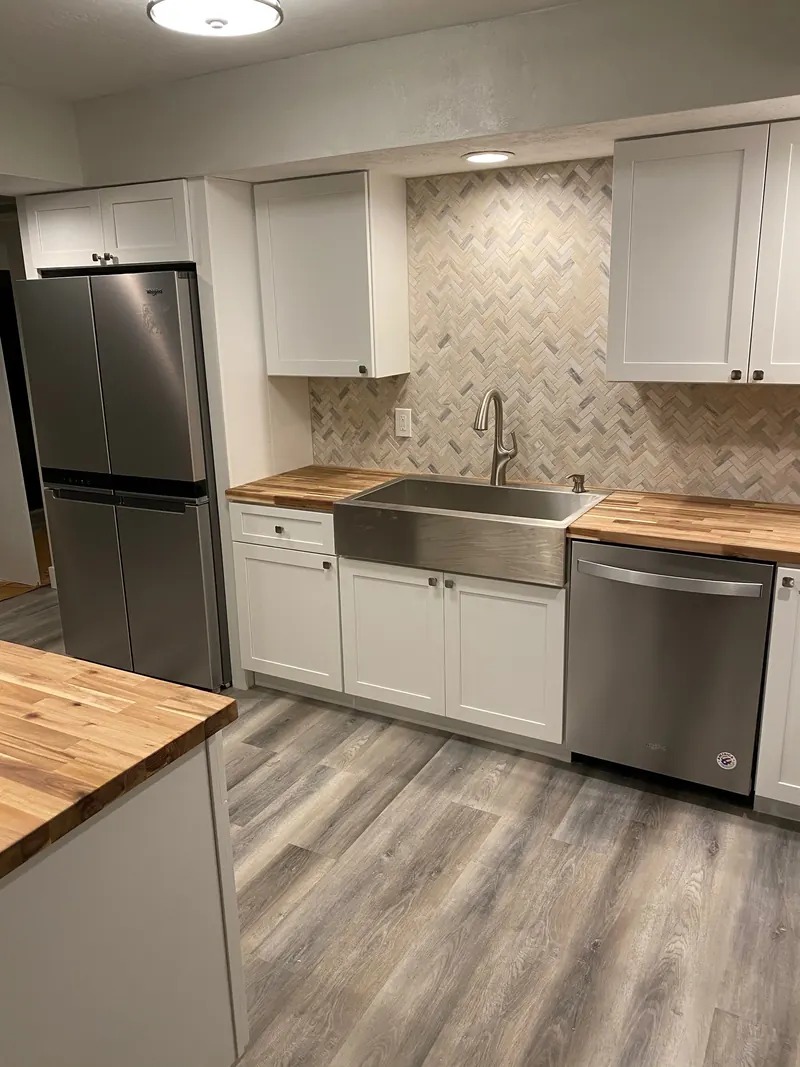
- Kitchens: either works. Tile for maximum durability, LVP for comfort while you stand and cook.
- Living areas and bedrooms: LVP for warmth and quiet, or wood-look porcelain plank for a lifetime floor.
- Sunrooms and Florida rooms: tile, because of the heat and sun.
- Condos: whatever your association allows, usually LVP or tile with an approved sound underlayment.
- Rentals: LVP or porcelain, both easy to clean between tenants.